

 |
| 1 |
THERE IS A WARM PLACE in my heart for New York's Brooklyn Museum; for its Director, Dr Arnold L.
Lehman, and the Curator and Chair of its Asian Art Department, Amy G. Poster MA (Mrs Robert L.
Poster). Without their combined support I would not have been able to publish this informative and
up-to-date record in our pages, which marks the museum’s “one hundred years of collecting at Brooklyn
and moving forward into the 21st century with plans for a major renovation and reinstallation of the
Asian and Islamic Art Galleries”. I forecast that for many years the seventy-seven text pages devoted
to the Brooklyn Museum and its “Arts of Asia, Egypt and the Islamic World”, will serve as a useful
and affordable catalogue of these notable collections. The articles are a true delight for everyone,
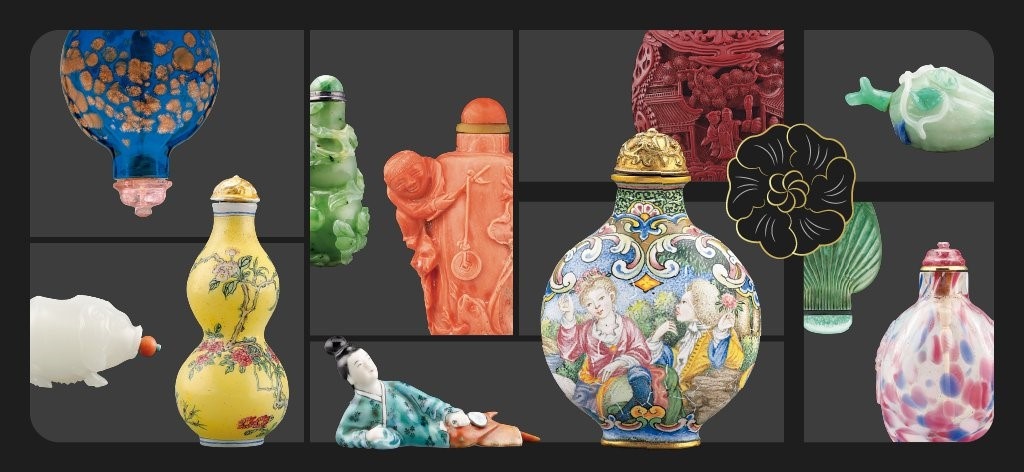
with their splendid and extensive (123 figure numbers) 4-colour illustrations which include several
with additional details and combinations of photographs designed and linked together by our own art
section. A large proportion of these photographs were specially photographed on commission by Arts of
Asia magazine from the museum’s appointed photographer, most notably the Japanese ceramic images that
record for Amy’s second article, “The Gerry Collection Comes to Brooklyn”.
 |
| 2 |
My hope is that more of our readers will visit the Brooklyn Museum in New York as a result of this
issue’s exposure. I am quite sure that they will enjoy the experience, and I recommend reading this
number carefully as a useful forerunner. To help first time visitors to find their way to the
Brooklyn Museum,
Arts of Asia has provided a page to the museum’s directions, including the museum’s
simplified map (on page 58), between the end of Director Lehman’s “Message” and Amy Poster’s own
first article, “Brooklyn and Asia”.
Here I wish to thank, most sincerely, those authors associated with the Brooklyn Museum whose
contributions have added so much to the edition’s success: Aimée Froom, Hagop Kevorkian Associate
Curator of Islamic Art; Madeleine E. Cody, Research Associate; Rachel Morris MA, New York University;
and Michael Chagnon, Research Assistant in Islamic Art. Their brief biographies will be found on the
Contents page of the magazine (page 3).
 |
| 3 |
Also listed is the brief biography of Anne Bromberg, The Cecil and Ida Green Curator of Ancient and
South Asian Art of the Dallas Museum of Art. Her coverage of the Dallas Museum’s “Forbidden City”
exhibition, November 21st, 2004 to May 29th, 2005, is notable for the unique portraits and artefacts
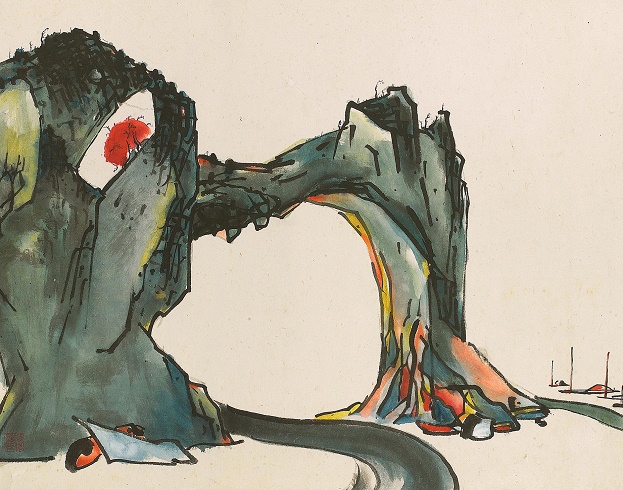
related to the Chinese Emperor, Qianlong (reigned 1736–1795), which include his seals, calligraphy,
ceremonial empress costumes and silk embroidery, courtesy of the Palace Museum, Beijing.
Robin and I had been very keen to visit Australia (20 million population, two-thirds living in major
coastal cities) as a result of the interest generated by our special Australian issue for November–
December 2003 featuring the collections at four major Australian museums: National Gallery of
Australia (Canberra), Art Gallery of New South Wales (Sydney), National Gallery of Victoria (
Melbourne), Queensland Art Gallery (Brisbane).
 |
| 4 |
Included as well was the Laverty private collection of
contemporary Aboriginal art in Australia. So we were delighted when told by Diana Collins, founder
and former president of the Textile Society of Hong Kong, and Judith Rutherford, Australian
contributor and Chinese textiles expert, that a very special exhibition “Celestial Silks: Chinese
Religious and Court Textiles” was to be shown at the Art Gallery of New South Wales (July 30th to
October 24th, 2004). What is more, we made sure to publicise the event with a cover article for our
July–August 2004 issue. Our Australian and international readers as a result had a chance to read
about the show before going to see things for themselves.
Contributor Christina Sumner, textile historian and senior curator of international decorative arts
and design at the Powerhouse Museum, prepared a special article for the
Arts of Asia September–
October 2004 magazine to coincide with her “Bright Flowers: An Exhibition of Central Asian Embroidery
and Ceramics at the Powerhouse Museum” (September 17th, 2004 to February 6th, 2005). Further, a
unique International Conference on Oriental Carpets “ICOC Down Under” and Dealers Fair also held at
the Powerhouse Museum from 16th to 19th September 2004, were wonderful occasions we could not miss.
We worked hard in Hong Kong to get ahead so we could assign ten days for our visit to Australia.
 |
| 5 |
Our trip was an undoubted success due to the help of our friends and prominent Sydney gallery owners
Lynette and John Cunnington. They devoted their time most generously to putting us in touch with many
collectors and Asian art enthusiasts. For our readers I record our day-to-day activities.
DAY 1 Wednesday 15th September
12 pm: Judith and Ken Rutherford take us to the Art Gallery of New South Wales where we meet Jackie
Menzies (Head Curator of Asian Art) and view “Celestial Silks” in the renovated Asian Gallery. Lunch
in the museum restaurant overlooking the Domain botanical gardens and the famous Sydney Harbour.
Sydney has a population of 4.5 million.
 |
| 6 |
3 pm: Appointment with Dr Colin and Elizabeth Laverty at their home in Balmain, one of the oldest
residential areas in Sydney. Before enjoying afternoon tea, we view the Laverty collection of
Aboriginal paintings.
5 pm: ABC interview with Tony Delroy. A well-known personality with a large listening audience, his
radio programme is aired throughout Australia.
7 pm: Chinese banquet dinner for Tuyet Nguyet hosted by Elizabeth Wong CBE. Guests Lynette and John
Cunnington, Dr Solomon Bard, Mr and Mrs Robin Hutcheon, Mrs Lily Xiao Hong, Mr Chung Lee, Mrs Jenny
Wallis and Mr Ken Wallis, and Dr Jencia Wong.
On our very recent trip to Australia to cover the special exhibition “Celestial Silks: Chinese
Religious and Court Textiles” at the Art Gallery of New South Wales I am first seen with contributor
Judith Rutherford at the imposing classical entrance of the museum
(1). (Robin took the photograph
and a majority of the following.)
 |
| 7 |
Next, a threesome, from the left Ken Rutherford, Jackie Menzies and Judith Rutherford
(2). The
display of “Celestial Silks” was most comprehensive
(3). We saw familiar imperial robes and costumes
from the Chris Hall Collection as well as from respected dealers Linda Wrigglesworth and Teresa
Coleman. I also enjoyed seeing the surcoat (bufu) and court beads (chao zhu) belonging to our friend
Humphrey K.F. Hui.
Jackie Menzies invited us to the museum restaurant overlooking Sydney Harbour and the old dockyard.
Jackie informed us that it took AUS$16 million (US$11.52 million) to complete the new extensions and
renovations. It was money well spent.
 |
| 8 |
I should mention that Dr Colin and Mrs Elizabeth Laverty welcomed us to their beautiful home with a
fine view of the harbour to study a small portion of their very large collection of Aboriginal art
(4). I would like to encourage our readers to return to the article on their collection published in
the November–December 2003,
Arts of Asia.
My dear friend Elizabeth Wong was the former Secretary for Health and Welfare in Hong Kong. Now half
of her time is spent in Sydney to be with her daughter Dr Jencia Wong and grandchildren. When Libby
knew we were coming she immediately made sure to organise a delicious Chinese dinner so I could meet
some of our old friends. Mr Robin Hutcheon, the former publisher of the South China Morning Post
newspaper, who was sitting to my right, still has very fond memories of his time in Hong Kong. Dr
Bard, who is well known as an archaeologist and a fine musician, also remembers our vibrant city. It
was a very enjoyable evening and I made several new friends as well. In the group photograph Libby is
on my left while Mrs Hutcheon on my right holds the copy of
Arts of Asia that I gave her
(5).
 |
| 9 |
DAY 2 Thursday 16th September
8:30 am: Mr and Mrs Noel Rose meet us at our hotel, the Sydney Park Hyatt, and drive us to their
apartment which overlooks Sydney Harbour to see their collection of antique Korean furniture. We then
visit their Chosun gallery in Pymble.
1:00 pm: Lunch at the Sydney Park Hyatt hotel with John McDonald, art critic for the Australian
Financial Review, and Publisher/Editor of the recently launched East-West Arts.
3:30 pm: Set up the
Arts of Asia stand at the entrance of the Dealers Fair in the Powerhouse Museum.
5:00 pm: Dealers Fair opens.
 |
| 10 |
6:00 pm: Official opening of two exhibitions: “Bright Flowers: Textiles and Ceramics from Central
Asia” and “Pathways through Paradise: Oriental Carpets from Australian Collections”. Opening speeches
by Mr Leigh Mackay (President, Oriental Rug Society of NSW), Mr Dennis R. Dodds (Secretary-General,
The International Conference on Oriental Carpets), Dr Kevin Fewster (Director of the Powerhouse
Museum) and Dr Nicholas Pappas (President of the Trust, Powerhouse Museum).
We had to get up early as former opera singer Young-ah and her husband Noel Rose punctually fetched
us from our hotel at 8:30 am. They took us to their new apartment overlooking the Harbour Bridge,
where we saw their exceptional Korean furniture
(6). Robin and I rushed to get to the Powerhouse
Museum in the afternoon to set up our
Arts of Asia stand as the Dealers Fair opened at 5 pm. By 6 pm
the two exhibitions were officially opened with rather long but comprehensive speeches. From the left
Mr Dennis R. Dodds, Dr Kevin Fewster, Mr Leigh Mackay and Dr Nicholas Pappas
(7).
 |
| 11 |
We were keen to view the exhibition galleries. The display of the textiles
(8) and ceramics in “
Bright Flowers” did not disappoint us. The bright colours of red, oranges and yellow in the textiles
were stunning. The display cleverly allowed visitors to see closely the beauty of the costumes and
textiles and therefore learn more. We were very proud to have the Powerhouse Museum senior curators
Christina Sumner and Claire Roberts pose with me at the
Arts of Asia stand
(9). To round up the
evening I was introduced to Lynette Cunnington’s friend, well-known Australian artist Mr Michael
Johnson, seen with Lynette
(10).
DAY 3 Friday 17th September
9:00 am to 5:00 pm: Attend the conference and host the
Arts of Asia magazine stand. The opening
lecture, “A Ningxia carpet in the Powerhouse Museum collection: a study in a cultural exchange”, by
Susan Scollay (Australia).
1:00 pm: Jennifer Sanders, Deputy Director, Collections and Exhibitions, Powerhouse Museum, invites
Tuyet Nguyet and Robin to lunch with Christina Sumner and Claire Roberts.
 |
| 12 |
6:00 pm: Lynette Cunnington’s gallery reception to celebrate the visit of Tuyet Nguyet. Over 180
collectors, friends and subscribers to
Arts of Asia attend the lively party in the spacious gallery
with much to offer.
About 170 people attended the first day of the conference, commencing with the lecture presented by
Susan Scollay and sponsored by Linda Wrigglesworth focusing on a Ningxia carpet belonging to the
Powerhouse Museum. Many delegates mentioned how much they enjoyed Dr Jenny Balfour-Paul’s lecture on
“Indigo”. Dealers’ receptions were held in various galleries such as Linda Wrigglesworth
(11), Ian
Perryman and Nomadic Rug Traders. The highlight of the third day was the well-attended reception at
Lynette Cunnington’s gallery (80 Queen Street, Woollahra NSW 2025, Sydney) including John and Robyn
Whitfield
(12), Hugh and Elizabeth Morgan
(13), Les and Anne Margulis
(14), and John Cunnington,
Susie Mylonas and John Hardie
(15). Many of the guests stayed on well after 8:30 pm.
 |
| 13 |
DAY 4 Saturday 18th September
10:00 am: Attend conference and host the
Arts of Asia magazine stand. Lectures include those given by
Peter Bichler (Austria), Thomas Murray (USA), Maria Wronska-Friend (Australia), and Gillian Green (
Australia). The latter sponsored by
Arts of Asia.
4:30 pm: To Nomadic Rug Traders gallery to view the exhibition of carpets and textiles co-curated by
Ross Langlands and Thomas Murray.
7:00 pm: Conference Dinner at the Art Gallery of New South Wales, including a tour of “Celestial
Silks” and a visit to the Yiribana Gallery of Aboriginal and Torres Strait Islander Art. Lynette and
John Cunnington host a table with guests Tuyet Nguyet, Robin Markbreiter, Ken Coles, Paul McCarthy,
Rowena Danziger, Jenny Balfour-Paul, Dr James Hayes and Sally Rubenstein.
We were eager to attend the second day of the conference as supporter Thomas Murray
(16) and
contributor Gillian Green were presenting their lectures. In the afternoon we went to Mr Ross
Langlands’ gallery (125 Harris Street, Pyrmont, NSW 2009) to learn more about the exhibition “Turkey
to Timore”. In the evening I very much enjoyed walking through the permanent collection of Aboriginal
and Torres Strait Islander Art at the Art Gallery of NSW. John and Lynette hosted a table at dinner
and introduced me to their delightful friends.
 |
| 14 |
DAY 5 Sunday 19th September
9:30 am: To SBS Radio in Artarmon for the Tuyet Nguyet one-hour Vietnamese language interview for
listeners across Australia. Ms Ngoc-Han B.T. Nguyen, Head of Group, Vietnamese Language Program, SBS
Radio, Sydney, conducts the interview.
11:30 am: Return to the conference and dealers’ fair for remaining lectures, final remarks and to
pack up our stand.
5:30 pm: A wonderful and relaxing sunset cruise on Sydney Harbour organised by the Oriental Rug
Society and sponsored by I & B Perryman Oriental Carpets. The cruise specially gives delegates and
their guests an intimate look at what residents believe is the most beautiful harbour in the world.
Delegates and guests have a chance to mingle with the conference speakers, all of whom have been
invited to join. The boat leaves from Convention Wharf (near the Convention Centre), Darling Harbour
and returns to the quay at 7:00 pm. Darling Harbour has a wide range of restaurants.
 |
| 15 |
With a tinge of sadness Robin and I said goodbye to the dealers at the fair and packed up our Arts of
Asia stand. Fortunately in the evening at the Sydney Harbour cruise we still had a chance to talk to
delegates, some of the participating dealers, as well as conference guest speakers such as Ms Niloo
Imami-Paydar, Curator of Textiles and Costumes, Indianapolis Museum of Art
(17).
DAY 6 Monday 20th September
8:30 am: Meet other Oriental Rug Society delegates at the Carlton Crest hotel and board the bus for
the three and half hour trip to Canberra (population 400,000) and our visit to the National Gallery
of Australia. On the way we pass Lake George—now dried up because of the severe water shortage.
 |
| 16 |
12:30 pm: Have packed lunches in the sculpture gardens at the National Gallery of Australia,
Canberra.
1:30 pm: At the NGA Robyn Maxwell, Senior Curator gives a lecture on the Gallery’s Southeast Asian
textile collection before splitting us in to smaller groups for private views of the rarest pieces in
the collection, including the Holmgren- Spertus collection of Indonesian cloths.
6:30 pm: In the evening there is a reception at the Asia Bookroom, before dinner at The Boathouse by
the Lake.
I especially enjoyed visiting the National Gallery of Australia where Robyn Maxwell took time to
personally show us their rare collection of Indian and Southeast Asian textiles
(18). Delegates were
also introduced to the conservation department and learnt about the painstaking work and the hundreds
of hours dedicated to the restoration of valuable textiles.
 |
| 17 |
DAY 7 Tuesday 21st September
9:00 am: Tuyet Nguyet interviews Christina Sumner.
10:00 am: Tour of Canberra. Alternatively, some delegates return to the NGA to view the exhibitions,
“Montien Boonma—Temple of the Mind” and “Sean Scully—Body of Light”, or the National Library of
Australia, “Xanadu Encounters with China”. Tuyet Nguyet and Robin select the tour to learn more about
Australia’s capital city, taking in the sites of the old and new Parliament buildings at Capital
Hill, the nearby embassies and the surrounding suburbs.
 |
| 18 |
1:00 pm: Lunch at Café in the House, Old Parliament. Tuyet Nguyet interviews Leigh Mackay.
3:00 pm: Tuyet Nguyet and Robin catch their plane to Melbourne while the other delegates return to
Sydney by bus, with a stopover at the historic township of Berrima in the Southern Highlands. Berrima
is a well-preserved colonial Georgian village and the Surveyor General Inn claims to be the oldest
licensed premises in Australia.
 |
| 19 |
I was gratified that I opted for the tour of Canberra where I visited the modern New Parliament
Building with tour leader Rachel Morris and international delegates from Russia, USA and Poland
(19).
Mount Ainslie gives breathtaking panoramic views of Canberra
(20). After lunch at the Old Parliament
we were driven back to the Crowne Plaza hotel where we said our goodbyes to the delegates and
conference organisers, including Mary Hunt Kahlenberg and Robert T. Coffland (owners of Tai Gallery/
Textile Arts in Sante Fe, New Mexico)
(21).
 |
| 20 |
DAY 8 Wednesday 22nd September
10:30 am: Visit the home of Mrs Pauline Gandel in Toorak for a personal tour of The Pauline Gandel
Collection of Japanese Lacquer. Its central focus is the leisure activities of the aristocracy of the
Edo period of Japan (1600–1868). Pieces from her collection have been exhibited at the Victoria and
Albert Museum, London, the Metropolitan Museum, New York, and the Art Gallery of New South Wales,
Australia. Also present Mrs Elizabeth Morgan and Mrs Kumiko Suzuki.
 |
| 21 |
1:00 pm: Mrs Elizabeth Morgan sponsors a luncheon at the National Gallery of Victoria International
where Tuyet Nguyet is guest of honour. Guests include Mr Tony Ellwood (Deputy Director, NGV
International), Mrs Pauline Gandel, Mrs Prue Holstein (Executive Director, Asia Society AustralAsia
Centre), Dr Gabriele Holstein, Mr Robert Joyce (Executive Director, Kazari Gallery, Prahran), Mrs
Lesley Kehoe (Executive Director, Lesley Kehoe Galleries, Melbourne), Mrs Joan Lawrence (Joshua
McClelland Print Room, Melbourne), Mr Christopher Menz (Curator of Decorative Art, NGV International
), Dr Mae Anna Pang (Senior Curator of Asian Art, NGV International), Mr Stuart Purves (Director,
Australian Galleries, Melbourne and Sydney), Mrs Kumiko Suzuki (CEO, Urasenke Foundation, Sydney), Mr
David Templeman and Ms Linda Wrigglesworth (Linda Wrigglesworth Limited, London).
 |
| 22 |
3:30 pm: Dr Mae Anna Pang gives Mrs Elizabeth Morgan, Tuyet Nguyet and Robin Markbreiter a tour of
the NGV International and its Asian galleries.
7:00 pm: Dinner with Mr and Mrs Leon Comber at their home in Glen Waverley.
Melbourne with a population of over 3 million has successfully blended the new buildings with the
historical ones. We were pleasantly surprised by the high-quality of the Pauline Gandel Japanese
lacquer collection. Mrs Gandel personally showed us many beautiful lacquer pieces from the Edo period
with erudite explanations. We then had to dash to the National Gallery of Victoria International as
Mrs Elizabeth Morgan staged a very friendly and informed gathering of the senior officials at the
museum, including Mr Tony Ellwood, Dr Mae Anna Pang and Mr Christopher Menz
(22). I am also seen
after the lunch with Pauline Gandel (left), Elizabeth Morgan and Prue Holstein
(23). It was thanks to
Elizabeth we had the chance to meet the Deputy Director and his curators to exchange our interests to
cover further exhibitions at the NGV International.
 |
| 23 |
DAY 9 Thursday 23rd September
10:30 am: Tuyet Nguyet interview with Caroline Davey for World Review on SBS National Radio located
at Federation Square, which also houses the Australian Centre for the Moving Image and the National
Gallery of Victoria's contemporary and Australian galleries.
11:45 am: Mr Terence Lane (Senior Curator, Australian Art, The Ian Potter Centre: NGV Australia)
gives Tuyet Nguyet and Robin a tour of the permanent Indigenous Art Collection and Australian Art
Galleries, as well as the special exhibition “John Glover and the Colonial Picturesque”.
1:00 pm: Lunch with Tuyet Nguyet’s Vietnamese friend Thu Tram at the Melbourne Grand Hyatt.
 |
| 24 |
2:30 pm: Lynette and John Cunnington accompany Tuyet Nguyet to see the exhibition “The
Impressionists: Masterpieces from the Musée d'Orsay” at the NGV International.
4:00 pm: Visit Gallery Gabrielle Pizzi to look at contemporary Aboriginal paintings and meet the
owner.
 |
| 25 |
5:00 pm: Attend Linda Wrigglesworth’s exhibition at Lesley Kehoe Galleries.
6:00 pm: Stuart Purves, the owner of Australian Galleries, hosts a reception in Tuyet Nguyet’s
honour.
8:30 pm: Tuyet Nguyet hosts a dinner for Stuart Purves, his gallery manager Suzi Cornish, Mrs
Elizabeth Morgan, John and Lynette Cunnington and Ben Cunnington.
My radio interview with Caroline Davey for World Review was very stimulating
(24). It confirmed for
me that interest was growing for Asian arts in Australia. She also asked questions on the phenomenal
price increases for Chinese works of arts and the strong demand from China and Taiwan.
 |
| 26 |
Robin and I were so pleased to meet Mr Terence Lane and learn about the Indigenous Art Collection at
the NGV Australia
(25). By now we were starting to have a much better understanding of this subject.
So when we went to Gallery Gabrielle Pizzi we were more familiar with the different landscapes and
historical meanings of the Aboriginal artists. We then visited Linda Wrigglesworth and Gary Dickinson
at Lesley Kehoe Galleries to wish them success during their reception that evening.
At Mr Stuart Purves’ Australian Galleries we were happy to meet again Takako and Leon Comber
(26),
former Managing Director of Heinemann Asia Limited and Director and Publisher of Hong Kong University
Press. Leon is currently a Research Fellow at Monash Asia Institute, Monash University. Mr Purves
truly has a comprehensive collection of well-known artists from Australia. He has two galleries in
Sydney and two galleries in Melbourne. His parents founded his family business over forty-nine years
ago. He is seen introducing me to his guests
(27), including Mr Robert Bradlow, Head of Decorative
Arts at Sotheby’s in Australia
(28).
DAY 10 Friday 24th September
7:45 am: Early flight to Hong Kong by Cathay Pacific. Back in our office in the afternoon, Hong Kong
time.
 |
| 27 |
During our 9:00 am interview on Tuesday morning, 21st September, textile historian Christina Sumner
told me she was extremely happy with the “Bright Flowers” exhibition. “The objects were so beautiful”
she says “and well displayed so visitors could get up close. When you do that, you become nearer to
the maker. This was hugely rewarding and moving.”
 |
| 28 |
It had been a long process, not full time, since 1999 when she first visited museum collections in
Central Asia. The special visit was organised by UNESCO. Without UNESCO she would not have been able
to see so much and meet so many people. The Powerhouse Museum generously paid for her travels to
Uzbekistan, Kazakhstan, etc. “When I saw the suzanis” she says, “I wanted to build a relationship
with the curators and arrange a collaborative project.” Christina went back to Uzbekistan to refresh
the relationship and they were very receptive to the exhibition idea, and the Powerhouse Museum kept
the project open. Deputy Director Jennifer Sanders was very supportive which was absolutely pivotal.
The exhibition was mounted by the Powerhouse Museum and funded by the State of New South Wales.
 |
| 29 |
The same afternoon Leigh Mackay, President of the Oriental Rug Society of NSW, confirmed the
conference was well attended with an average of 170 people each day.
“Considering Australia is not a rug centre it went well. We had excellent speakers from Australia and
overseas. They spoke not just on rugs, but also on Asian textiles and Aboriginal weaving. We had a
variety of topics and quality papers. The strong reception from delegates meant we achieved our aims.
“We want to bring together international visitors and speakers for Australians to hear. An
educational and informative purpose was met. It was also a chance for people to get to know each
other and exchange contacts and build friendships. Of course we also wanted people to have an
enjoyable time, while gaining an idea of the textiles in the museum.
 |
| 30 |
“The rug society has been going for twenty-four years. We have sixty-five full-time members from
Sydney alone. I am the President. Christina Sumner has been a committee member for more than twenty
years. The Powerhouse Museum provides space for seminars and workshops, in return any funds we
receive goes to the museum. We can provide financial assistance for museum purchase of pieces. The
Powerhouse is the only museum in Australia that has a mission to actively collect textiles.”
On the opposite side of the world, the 7th year Asian Art in London opens with a champagne launch and
exhibition “Encounters: The Meeting of Asia and Europe 1500–1800”. This is being held from 6:30 to 9
:30 pm at The Dome, Victoria and Albert Museum, Cromwell Road, London SW7 2RL, on Friday, 5th
November.
I list here the names of the London dealers who support and appear in this November–December 2004
magazine who are exhibiting at the same time as Asian Art in London, 4th to 12th November, 2004: The
Textile Gallery; Anthony Carter; Eskenazi Ltd; John Eskenazi Ltd; Roger Keverne Ltd; Littleton &
Hennesy Asian Art Ltd; Theresa McCullough Ltd; S. Marchant & Son; Priestley & Ferraro; Linda
Wrigglesworth Ltd; and Berwald Oriental Art. Most of the London galleries are expected to continue
their winter exhibitions during the November month.
 |
| 31 |
The repeating “three-dimensional” cubes, sometimes known as “tumbling blocks” geometric pattern
(29),
is from the introduction to East to West the latest brochure by Textile & Art Publications, 2004. The
text is by Michael Franses who would like to thank Professor Roderick Whitfield and “the many friends
and colleagues throughout the world who have brought these wonderful examples of textiles to our
attention”. During my trip to Australia important rugs and textiles dealers repeatedly said Michael’s
exhibitions at The Textile Gallery are always of the highest standard and taste. The gallery carries
beautiful Chinese woven silks and embroideries dating from the 3rd century BC through to the end of
the 16th century AD, as well as knotted pile carpets made in western China from the 16th to 17th
centuries.
Eskenazi Ltd will be showing a selection of Ming and Qing porcelains mostly for court use. “One of
the rarest and most brilliantly coloured pieces on show is a turquoise-glazed vase in the form of a
double gourd, painted on the base in underglaze blue with the imperial six-character mark of the Ming
Jiajing Emperor (1522–1566). In 1881, it was first published in the West by Octave du Sartel, the
celebrated French collector, while in the 20th century it belonged to Mr and Mrs Alfred Clark and was
loaned by them to the seminal exhibition of Chinese art held at the Royal Academy, Burlington House
in London in 1935.”
(30)
 |
| 32 |
Roger Keverne made news recently when he paid US$511,500 at Christie’s New York on behalf of Compton
Verney, a private museum in Warwickshire, England, for a 12th century BC bronze vessel in the form of
stylised back to back owls. He announces his winter exhibition of fine and rare ceramics and works of
art ranging from the Neolithic period to the 19th century. Illustrated is an archaic bronze food
vessel (gui) dating from the middle of the Western Zhou dynasty (1027–771 BC)
(31).
From the show at Littleton and Hennessy Asian Art Ltd is an imperial lingzhi fungus (length 43.1 cm)
(32). It is inscribed on the reverse with an imperial poem composed by the Emperor Qianlong in praise
of the lingzhi. The poem was inscribed by Ruan Yuan. Fang Jing Pei illustrated this piece in the book
Treasures of the Chinese Scholar. It is one of the highlights of the Littleton and Hennessy “Arts for
the Scholar” exhibition, which comprises articles one would associate with the scholar's studio.
 |
| 33 |
S. Marchant & Son, to coincide with Asian Art Week in London, are exhibiting “Ming Blue and White,
Jiajing to Chongzhen, Including Dated Examples”. Illustrated is an incense burner dated 1617, made in
the 45th year of Wanli and inscribed “beautiful vessel of Wang Sheng-yu”
(33). A hardback catalogue
fully supported in colour with eighty-two Ming blue and white examples is available. The foreword is
written by John Ayers, the former curator of the Oriental Department at the Victoria and Albert
Museum, the noted author of many books on the subject of Oriental Ceramics.
Regular readers of
Arts of Asia will know about Longyan wood furniture from contributor John Kwang-
Ming Ang’s article on this subject in our last issue. Incidentally Hong Kong gallery China Art of
Hollywood Road has sent me a picture of their “splendid club-type armchair made of finest Fujian
Longyan wood, with carved detail on the arms and feet”
(34). It comes from a collection of early to
mid-20th century household furniture from China, which they have been showing recently.
 |
| 34 |
Vietnamese myself, brought up in that beautiful country among orchards bordering the Mekong River, I
find the Nguyen Dieu Thuy painting Spring on the River (detail) especially appealing
(35). While the
tendency of artists today is to be provocative, the paintings of leading Vietnamese lady artist Dieu
Thuy have a soothing quality. Zee Stone Gallery on Wyndham Street in Hong Kong will be showing her
work from 12th to 28th November. Before becoming a professional artist, Dieu Thuy studied the violin,
graduating from and teaching at the Conservatoire de Musique in Saigon.
Our Italian friend Renzo Freschi with an Oriental art gallery in the Via Gesù, Milan, has let me know
that he has been working actively on his exhibition of stone and bronze sculptures from Gandhara,
India and China, with Khmer works from the 6th to 13th century. A catalogue has been prepared
accompanied by descriptions from two eminent Italian experts, Marilia Albanese and Cinzia Pieruccini.
The title of this exhibition is “Body and Soul: Form and Emotion in Oriental Sculpture”. Illustrating
this expression is the schist carving of Bodhisattva Padmapani, 2nd to 3rd century art of Gandhara,
height 48 cm
(36). The figure seems “pensive, self- absorbed and detached from the world, indicated
by the two diminutive figures of praying devotees on either side of the throne”.
I am proud to record here that
Arts of Asia has played a significant role in helping to expand their
awareness of Asian arts for the people of Australia. Over twenty-five years ago I went to Sydney to
find the best distributor for our magazine. I chose Gordon and Gotch who have remained with us ever
since. During my second trip to Sydney, in 1986, I met many of our subscribers. They told me it was
thanks to reading
Arts of Asia that they learnt to appreciate going to museums and started
collecting. On my most recent visit with Robin I found quite a number of the early
Arts of Asiaenthusiasts have become owners of successful galleries. Works of art they are now offering range from
Chinese furniture, Japanese ceramics and lacquers to textiles and rugs from Turkey and Iran.
 |
| 35 |
I was especially pleased by the warm welcome I received from the Directors and Senior Curators of the
Art Gallery of New South Wales, the Powerhouse Museum in Sydney, the National Gallery of Australia in
Canberra, and the National Gallery of Victoria in Melbourne. They all generously gave
Arts of Asiacredit for their enthusiasm and encouragement in forming their own Asian art collections as well as
their staging of numerous exhibitions. There is no doubt that with our coverage of the various
Australian museum and private collections we have helped in our own way to make Australia better
known worldwide. Our magazine is now read in at least ninety-two countries.
My most eager wish is that more Asians and Westerners will visit Australia, whose people enjoy a good
economic life. And I hope that Australians when they visit America will make a point of spending at
least one day at the Brooklyn Museum, where they can learn about Asian art and history under the roof
of one building.
 |
| 36 |
As I know that our gift subscriptions are very much appreciated by recipients, I wish to offer a
special discounted price of US$60 or HK$450 for “new” gift subscriptions (received by February 2005)
for six beautiful issues, including the cost of surface mail delivery—while a “new” gift subscription
addressed to Hong Kong residents is offered at only HK$350. Indeed, our readers can be certain that
Arts of Asia is truly an ideal New Year present. It will surely give constant pleasure and encourage
enduring friendships.
My husband and Robin join me in wishing all our wonderful friends and readers peace, good health and
prosperity during the coming festive season and throughout 2005. Please do know that, as always, I
value your support of the magazine as well as your suggestions and advice for the coming year.