
 |
| 1 |
ADJOINING MY EDITORIAL, for this “Changing Face of the Shanghai Bund” issue of Arts of Asia March–April 2005, is the brilliantly colourful jacket of the book Shanghai Through
the Panoramic Eye (128 pages, full colour, 23.5 x 31 cm, HK$260) (
1). The year 2003
folio of photographs and mainly the overseeing of the book production is by Fumio Okada,
Chief Executive of Daiichi System Graphics Co., Ltd (2204 Kodak House II, 39 Healthy
Street East, North Point, Hong Kong, Tel: 852-2342-4283, E-mail:
dtp@systemgr.com.hk). I
am glad to disclose that not only is Mr Okada an international Japanese friend, but he
has also worked on the beautiful colour separations for Arts of Asia since 1971. This
must be a record!
From the Oriental Pearl Radio and TV Tower, with its sputnik-like lower sphere on the
left of the picture a landmark, we look in the jacket’s night-time panoramic view across
the Huangpu River to the waterfront buildings of the new Pudong area. This exuberant,
uninhibited example of China’s landscaped monumental planning and architecture is
described by Peter Hibbard, the enthusiastic editor of the book in his Foreword, as
having been “little more than farmland and warehouses at the turn of the 1990s. Today it
is a superbly choreographed spectacle of skyscraper spires, attractive parks, massive
housing developments and wide tree-lined boulevards. At its core Lujiazui has been
designed Asia’s Wall Street and the city is again emerging as a major centre of trade,
finance and commerce. With its unrelenting drive for modernity Shanghai is set to
showcase its success by hosting the World Expo in 2010.”
 |
| 2 |
The Oriental Pearl Radio and TV Tower appears again in Fumio Okada’s daytime panorama
(
2). It is an aerial view from Pudong of the alignment of the right-hand stretch of the
Shanghai Bund up to the curvatures of Suzhou Creek and shortly beyond. For orientation I
publish in black and white a reduced version (
3) of author Eric Politzer’s Map 1 in this
issue (see pages 64-81). Readers can compare the Bund of close to today’s photograph
with its plan in 1855 of the emerging foreign settlements.
 |
| 3 |
While maintaining the integrity of the photographer’s unique daytime panorama, to aid
our subscribers across the world to identify a few of the most notable early 20th
century buildings and historic features, capital letters have been added as follows:
A-dome-topped former Hongkong and Shanghai Bank building, constructed between 1921 and
1923;
B-Customs House and Clock Tower built in 1927;
C-pyramid-capped Cathay Hotel, built in 1929 and lived in by its owner Sir Victor
Sassoon (notable entrepreneur with a collection of Chinese ivories formed in Peking
between 1915 to 1927, catalogued in three volumes in 1950), now the north wing of the
Peace Hotel along the Nanjing Road and fronting the Bund;
D-adjoining, vertical stressed approaching to “modern” 1937 Bank of China building;
E-Suzhou Creek, still seen in the foreground of the photograph crossed by a sturdy two-
arched centre-supported low bridge built by the British a hundred years or so ago.
 |
| 4 |
Many of the imposing late renaissance-style office buildings erected along the Bund in
the 1920s and 1930s were the work of Palmer and Turner, a major professional firm of
former British colonial architects and engineers, still active today though
headquartered in Hong Kong. Progressively their buildings along the Shanghai Bund during
the first half of the 20th century became increasingly shorn of their imperial columns
and classical mouldings, with art deco featuring mildly during the progress of the
1930s.
I first visited Shanghai, with my architect husband Stephen Markbreiter and our three
young children in December 1965. Since then I have visited the Huangpu River major city
and its environs many times. Several of these areas were featured in early issues of
Arts of Asia which has made it more difficult to select the Fumio Okada panorama most
appropriate to complete these pages. In our January–February and May–June 1997 back
issues I celebrated first in my Editorial the opening of the new Shanghai Museum,
followed by an outstanding issue on the Shanghai Museum Collections with individual
articles by their curators (
4). I have therefore no hesitation in selecting for our
international subscribers a portion of Fumio Okada’s superb panorama of People’s Square
(
5). It shows, centre, the Shanghai Museum in the shape of a ding (bronze ritual food
vessel), with to its left the spectacular Grand Theatre with its crescent-shaped top
floor. The evergreen landscaping with its trees and lawns is a fine example for China’s
world cities. Even the appropriate part of the super-highway is lined with plants.
 |
| 5 |
I found disturbing an article by Jane Cai that appeared in the South China Morning Post
on Friday December 31st, 2004: New Year’s Eve! She repeated that there has been an 80
per cent surge in the number of historic relics stolen in mainland China last year. She
quotes Lu Jiansong with the Cultural Heritage Research Centre at Shanghai’s Fudan
University, who says the situation will not improve unless central and local governments
make the issue a priority.
In my wish to do what I can, I have discussed this so far with representatives of the
major auction houses, gallery owners, international and local dealers during the past
few weeks. They agree that the Chinese government can and should do more to prevent
looting. However, they tend to believe from their own experiences that during 2004 and
the preceding three to five years the volume for Chinese art and artefacts arriving in
Hong Kong was in fact declining dramatically-not increasing. Rather they blame the
booming market itself inside China for the incentive to looting.
According to the American trade particularly, any new restrictive regulations designed
to stop the entry of Chinese art into their country could have an affect of cutting off
Americans from all kinds of access to Chinese cultural property. A correspondent points
out that the Chinese government does not have any system set up for screening and
licensing the export of any cultural property other than the lowest grade “friendship
store” material. Also there is a large volume of Chinese art in the hands of Chinese
collectors in Hong Kong which quite legally belongs to them. He says they should not be
restricted from sending it outside of Hong Kong to whatever destination they choose.
As a collector of China Trade paintings since many years, I believe particularly useful
in this issue is the article by premier London conservator Alan Bradford. I would
especially like to thank Martyn Gregory, Patrick Conner and those other friends who have
made available the examples.
 |
| 6 |
The article by Professor William Shang on Chinese late 18th to 19th century winter
scenes is also relevant. It arises as a result of our own inquiries since a number of
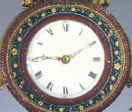
years as to the meaning of an early winter scene in our own collection (
6). (See “The
China Coast Collection of Tuyet Nguyet and Stephen Markbreiter” by Patrick Conner, Arts
of Asia, March–April 1996 issue, title page.) Much international interest these days
focuses on modern Chinese paintings. Surprisingly western traces can be seen to date
back to the 16th century at least. This interesting East-West subject, with influences
in both directions, will be the subject of a book review by Colin Sheaf in our May–June
2005 magazine.
As we approached the Chinese New Year on February 9th, most recognised in our minds was
still the disastrous earthquake and tsunami waves of December 26th, 2004. While
heartbreaking for so many, our hopes must be that the immediate positive response of
help in massive aid and reconstruction from the people of all nations and their
governments will in the long run bring East and West closer together. For those amongst
our readers who have suffered heartbreaks and bereavements, please do know they have my
understanding and that I feel for them. But life is fragile and must go on.
 |
| 7 |
I do send all our readers, contributors and advertisers my warmest best wishes for the
Chinese New Year which commenced on February 9th, 2005. The Year of the Rooster, it is
illustrated here (
7) by a Japanese wood carving of a rooster and hen, painted in
naturalistic colours, signed Ueno Gyokusui, a high regarded Kyoto wood carver, circa
1920. It is published courtesy of our long-time supporters Lucille and Glenn Vessa at
Honeychurch Antiques Ltd (29 Hollywood Road, Hong Kong).
On December 17th, 2004 Christie’s Hong Kong Limited announced in a press release that
“After nearly twenty years at Christie's, Anthony Lin has decided to leave the auction
house at the end of January 2005 to pursue an independent career as an art advisor.”
Anthony’s full biography appeared in an interview “The Publisher and Christie’s Anthony
Lin at the Mandarin Hotel” that we published in the September-October 2003 magazine on
pages 10-13.
 |
| 8 |
On January 13th this year Anthony came to my office, at my invitation and a transcript
of our lengthy interview together (
8) is published as a correction to the many rumours
and inaccurate gossip that have been circulating in Hong Kong, and most probably in the
Asian art world elsewhere.
Tuyet Nguyet-It is a surprise that you, as Chairman of Christie’s Asia, a position
you have been holding since September 2000, are leaving the auction world. People did
not expect your press release at all. With Christie’s moving its venue for its end of
May sales to the Convention and Exhibition Center, everybody thought you were busy
building up for the most extraordinary sale of the year. Many friends called me asking
whether your resignation is true.
Anthony Lin-Actually a lot of people heard about it from other colleagues or general
gossip.
T.N.-For example there is a rumour that you were sacked.
A.L.-Let me make this very clear. If you were sacked there would not be a press release.
Edward Dolman [Christie’s Chief Executive Officer] was very good about it. He wanted to
give a very clear, positive message that I was leaving Christie’s on my own accord under
the friendliest circumstances. There is goodwill on both sides, clearly stated in the
press release. We both made very positive comments.
T.N.-The whole process was so fast. It was unexpected you could tender your
resignation and then step down just more than a month later.
A.L.-It has been on my mind for some time.
T.N.-For how long?
A.L.-I have been mulling it for well over a year now. During my sabbatical I thought
about what I really wanted to do. There are opportunities for working in different ways
in the art market. We live in exciting times with China opening up. The main thrust was
I felt auctions had become very highly pressured. I am in the second half of my career
and it makes you think about how you use your time and how you might be able to have a
career in a different way that would allow you to pursue more personal interests yet
continue to contribute to the art market.
Christie’s had been very generous in granting me the sabbatical which allowed me to
think about what I wanted to do with my career, how I wanted to work. When I came back I
gave it a very good try and was lucky the market was so strong in 2004. In fact last
year was our best ever and I felt it a good time to leave on a high note.
T.N.-You are absolutely correct that you are leaving Christie’s at the height of your
career. I read with amazement that Christie’s Hong Kong made US$100 million in 2003 and
nearly double that amount, US$181 million, in 2004. How could they afford to let you
go?
A.L.-It wasn’t their decision.
T.N.-It’s a miracle to make money like that. If I have HK$200,000 and put it in The
Hongkong Shanghai Banking Corporation Limited for three months, the interest is only
HK$5. Not even enough to buy a cup of tea.
A.L.-You are getting almost nothing, leaving your money in the bank. A lot of people
have moved funds into the art market, which is one of the reasons the art market has
been very strong the last two or three years.
T.N.-Which areas in the Chinese art market do you think will perform well at future
auctions?
A.L.-The contemporary and modern Chinese paintings market is very exciting, with
dramatic growth over the last few years. We have a great expert in Eric Chang who has
done so well and is one of the best experts I have worked with. There has been a lot of
buzz with its 20th century slant, as well as this very “hip”, avant garde element. New
York and London sales of Western contemporary art are huge growth areas. I see this
happening in Hong Kong as well on the Chinese side. We have had these sales for the past
seven years and in the last two years they have taken off. There are many new buyers,
not just from Asia but from Europe and America. They are looking at what is going on in
China. Much of the arts in this area are social, political and economic commentaries of
China. It is intellectually stimulating for younger buyers from Asia, as well as Europe
and America.
T.N.-I fully agree with you that this is an area with a wider audience, whereas
quality, rare and expensive ceramics is more restrictive to the wealthy.
A.L.-You are right. More traditional areas of art, ceramics and the top rung of 20th
century painting are limited to collectors with deep pockets. But contemporary art is
thought provoking, and of course there are no authenticity issues because they are works
of living young artists.
T.N.-Your cv is remarkable and I am impressed with what you have achieved in nearly
twenty years at Christie’s, especially establishing the Christie’s Shanghai office in
1994. What did you do before you joined Christie’s?
A.L.-I did editorial work in Singapore at the Straits Times and research for
publications on the history of Singapore. Then I worked in the textile industry for a
year. My father had a textile factory that made jeans for export to Europe and America.
It was great business experience, but I did not enjoy it.
T.N.-Was your father born in Singapore?
A.L.-No, he was from China. Both my parents were born in China.
T.N.-When did they move to Singapore?
A.L.-They were in Singapore before the war. They left China during the turmoil in the
1930s. Then of course as events turned out they had to stay and could not go back after
1949.
T.N.-During your nearly twenty years at Christie’s what did you most learn?
A.L.-My greatest satisfaction in Hong Kong has been building sales from 1993 to where
they are today. I could not have done it without the amazing team we have in Hong Kong
who are dedicated to work and are fully committed to the task at hand. I don't think
this is found anywhere else other than Hong Kong. For me, that was the biggest
satisfaction. We put so much into building the business. The building blocks are made up
of people. You will find it in every department. We built up sales in Chinese paintings,
ceramics, jewellery, and then Southeast Asian and 20th century modern Chinese paintings.
The team is incredible. That is the greatest thing I have learnt. That people, at their
dedicated best, outperform expectations, even their own.
T.N.-When you were appointed Managing Director of Christie’s Hong Kong in 1993, some
of the foreign collectors were unsure as the first Chinese person to head the company
you could succeed. I said why not, as long as you had the expertise and the affinity to
cope with people of all works of life. I remember when you were appointed to hold your
second auction in Hong Kong you wanted smaller auctions and focus on quality not
quantity.
A.L.-That was one of the first things I wanted to do.
T.N.-The auctions under your supervision were a great success.
A.L.-Looking back it was a historic moment in time. Hong Kong was still very much a
colonial place in the 1980s right up to the handover in 1997. People were still used to
British run institutions and organisations. Some felt it was slightly unusual that I was
appointed to that position. But people forget that Mamie Howe ran the show at Sotheby’s
for years. She was a business woman and highly respected. Of course as things turned out
it was her sister, Baroness Lydia Dunn, who became Christie’s Chairman. I learnt
tremendously from her. She had incredible style in everything she did and had great
tact. She was very astute.
T.N.-When did Christie’s and Swire join together?
A.L.-From 1989 to 1994 Christie’s and Swire had a five year joint venture. This was
something decided in London. It was felt that Swire might be able to give us an entrée
into segments of the market that we were not already familiar with. After five years,
the joint venture ended and it reverted to Christie’s. But Baroness Dunn remained
Chairman of the Board until she left Hong Kong. Those were amazing early days of growth
and consolidation. Before I came in 1993 it was pretty tough. We did not have full-time
departments and that was what we needed. Full-time specialists based here with a full
infrastructure, then you have top-class support to grow. Up until then sales were all
run and processed out of New York or London. Large tranches of property were sent out
here and I would coordinate everything in Hong Kong. One of the first things I realised
was we needed a proper base here with dedicated specialist departments.
T.N.-When Christie’s had its first sales in Hong Kong on January 13th, 1986, James
Spencer was the person coming to Hong Kong from London and Alice Piccus was the
Christie’s Hong Kong representative. The sales took place at the Mandarin Hotel and were
conducted by Christie’s Chairman John A. Floyd. It was reported in the Arts of Asia May
-June 1986 magazine.
A.L.-In the early days, most of the property came from Europe and America. There were
very few local consignors for the first few years. People here were more loyal to
Sotheby's. It was a great learning curve, understanding how brand perception works. When
we first came to Hong Kong Sotheby’s was the brand. It was not a global market.
Information is now much more widespread. At that time Hong Kong people generally
attended Hong Kong sales, very few participated in New York or London. Markets were very
insular. Regional clients were active only in local markets, rarely crossing borders to
buy and sell. Few dealers in those days did that. Of the few who did well, Robert Chang
understood the global market and knew he could buy something in New York and sell it for
a better price in Hong Kong. He was very skilful and saw the huge potential. I learnt a
great deal from him about taking a global view of the Chinese art market. He would
consign huge numbers of lots to each sale location, and knew how to get the best out of
each auction. I was always amazed that he remembered everything in his head. Many did
not see how hard he worked; he had all that drive and ambition.
T.N.-I have known him for over thirty-five years and he is a remarkable man. Last
night when I looked through our back issues and saleroom news reports in our May-June
1986 issue, I found that Christie’s first Hong Kong sale accented only on Chinese
paintings and jewellery. How come?
A.L.-Well, that was all we had.
T.N.-What about Chinese ceramics?
A.L.-That only started the following year. They decided that we had to have a first
sale. I remember the jewellery came in very late from an old Hong Kong collection.
T.N.-In the early years you consistently offered wonderful Chinese paintings.
A.L.-K.S. Wong, working out of New York, was running Chinese painting sales. He would
focus on putting together 19th century Chinese paintings for Hong Kong. That was how it
worked out. By 1987 we offered ceramics, jades, rhinoceros horn, other works of art and
jadeite carving. Jadeite carvings used to make a fortune and now they are out of
fashion. It is fascinating to see how the market has changed.
T.N.-The lesson to be learned is to collect what you really enjoy.
A.L.-I think the people who bought those jadeite carvings then were new wealthy
collectors who wanted to have them as status symbols in their homes and offices. It was
then a different lifestyle.
T.N.-How did you develop such in depth knowledge in Chinese ceramics?
A.L.-It was the basic training you received starting up as a junior at an auction house
in London. I don't think you can replicate that experience today because there simply
isn’t the volume you used to get. People would walk in with boxes filled with twenty or
thirty items which might include jade carvings, ceramics and works of art that had been
in families for fifty or a hundred years. You saw an extraordinary body of material and
had to process everything, whether it was genuine or not. That was a great learning
experience. Genuine lower value items went to South Kensington, and if not they were
returned. Everything had to be catalogued on cards and you learnt how to describe pieces
accurately. One year there was a snuff bottle convention in London and six or seven
hundred snuff bottles came in. No one else wanted to do it so I catalogued the whole
lot. The interesting thing for me was to sit down with the Bob Stevens catalogue and
learn all the materials. I found it fascinating. The entire gamut of Chinese
craftsmanship is to be found in Chinese snuff bottles, whether it is painting, glass,
etc.
T.N.-With your trained eye, can you tell whether a Yuan or Ming blue and white
ceramic is genuine or not?
A.L.-Today a lot of technological research concentrates on mineral content in the body
and cobalt and the recipes of the glaze in different periods. These are very scientific
aspects. The ceramic institute in Shanghai have been holding conferences for years and
years finding out how ceramics were made. Their findings across the whole repertoire
have been published. But that is only one aspect. What I think you need to do is take
your time to look at every aspect of a ceramic: glaze, construction, shape of the foot,
the way the clay thins to the rim of a dish or a bowl, bubbles, painting, cobalt-it is
like detective work. You need to give yourself time to examine. Most of the copies have
a flaw somewhere. There are areas where they fall down. These are handmade, remember.
They are still crafted. There are recognisable traits to the painting and you cannot
rush your decision. Porcelain is an area where there are duplicates for comparison so if
you look at enough genuine examples, after a while you begin to look for the right
style, feel, proportion, and painting. If there is ever a sliver of a doubt, I repeat,
you need to take time and not rush a decision.
T.N.-You are very wise. What is your particular strength in Chinese ceramics?
A.L.-I never feel you know enough as there are so many aspects in the art market. I
particularly enjoy working with bronzes, stone sculptures, Song ceramics and early blue
and white. I am probably most comfortable looking at Yuan and early Ming blue and white.
Song is fascinating but it is a very difficult area.
T.N.-Why do you say that?
A.L.-It is very complex. There is a great variety of black, white and green wares and
not that much available to study in detail. It is also the period furthest in time from
us, so there are far fewer examples around. You have to work in museums for some time
before you get to handle rare examples of the best. The greatest academic debates over
dating still arise in the Song area. It is fascinating and knowledge continues to grow.
But of course Qing is also complex because of the sheer range of technique and style,
not just in blue and white. There is a huge variety and so many different types of
enamelled and monochrome wares. In a way, I am grateful for the way auction houses were
set up. It has given me the opportunity to learn a tremendous amount as well as a lot of
pleasure.
T.N.-Some of our friends are amazed that Yongzheng pieces fetch such high prices. Can
you explain?
A.L.-Yongzheng has always fetched high prices because of the quality. During the
Chenghua and Yongzheng periods there was extremely stringent control in terms of
aesthetic and technical quality. They were also very demanding arbiters and a huge
quantity was rejected. Perhaps only ten per cent was accepted. Much was destroyed and of
course the very best craftsmanship was the result.
T.N.-Over the last two or three years many reporters have said only Chinese
collectors dare to pay high prices.
A.L.-It’s not true at all. It is a story that has been running for many years now,
especially in the western press. People have been very keen to develop this theme that
the “dragon” has awakened. They are absolutely right that China has become a force. If
you look at China ten years ago compared with now, there was nothing then. Auctions only
began ten years ago in China and where they are today is just incredible. This is really
about the opening up of China with the liberalisation of the economy under Deng
Xiaoping. That in itself is a huge phenomenon and a wonderful story. But journalists
have gone beyond that, saying that the mainland Chinese are now the biggest buying
force. It is very variable. From 1999 to 2003 there was strong growth in the buying
pattern outside China, in Hong Kong, London and New York at the upper end of the market.
Then suddenly last year when they introduced the credit squeeze, it had a noticeable
adverse effect on top end buying. What we noticed last year however was more and more
mainland people came to Hong Kong to buy Chinese paintings. Of course prices are more
modest from HK$100,000 to HK$1 million. We are not talking about paying HK$35 million
for one vase. There is steady growth, but I don’t think mainland Chinese buyers were
consistent buyers of the top lots. The biggest buyers overall are still the Taiwanese.
T.N.-Where did they get the money to buy?
A.L.-There is plenty of money there. What is fascinating is that a lot of the
businessmen in Taiwan are doing so well out of China. Some of them have been producing
computer chips in China, others were broadening their business or production networks in
China. Their wealth has grown exponentially over the last five to ten years because they
have all gone into China to build property or plants. They have increased their turnover
dramatically and because of the low cost of production in China, they have made fortunes
many times over. These are the big buyers. There are four or five exceptionally strong
Taiwanese buyers.
T.N.-For the coming year, how do you see the market for Chinese art?
A.L.-I think it will continue to be very strong. I don't believe it will weaken, at
least not in the first half of the year. China had exceptional sales the end of last
year and I think it will carry over. There is no indication of any panic yet and there
is a huge amount of money still in this market. As for China there is no doubt one day
it will become the indisputable force when it becomes a mature economy. It is still
early days yet.
T.N.-You were the one to ask Christie’s to move its sale to the Hong Kong Convention
& Exhibition Center and you are not going to be there to conduct the first auction.
A.L.-Since we moved all our sales to Hong Kong in 2002 there had been a strain on
resources. We were quickly outgrowing the space and there was just not enough room in
the hotel to display the works. We had to hire additional space in a separate location
from the hotel to hang paintings. We can sell more and I think we do want to sell more
because in terms of Southeast Asian paintings there is a very interesting contemporary
side we haven’t had the space to showcase. This is equally so in Chinese contemporary
painting. We have also started to include Korean contemporary painting which was one
hundred per cent sold, and in addition we will have Japanese contemporary painting in
May. It is really going to become a pan-Asian contemporary painting effort which is very
exciting.
T.N.-But overseas dealers have said how can you expect them to travel to Hong Kong
four times a years to attend the Sotheby’s and Christie’s sales now that they will not
take place more or less at the same time?
A.L.-I don’t think that is an issue any more.
T.N.-It is a very serious issue.
A.L.-Dealers from Hong Kong fly to sales in Germany, London, New York and Paris, all at
different times. They fly everywhere. I don't think overseas dealers should complain as
Hong Kong dealers do a lot more travelling than they do. We are in a global market and
if you want the goods you have to go where they are offered. Business people fly around
the world at the drop of a hat for short meetings. We made it quite clear that we did
not want to inconvenience people but we have a space issue. We cannot sell more at the
moment because we are just bursting at the seams and the only time we can sell at the
Convention Center is in May. That was the only slot they had. This is a market
requirement. Dealers like Eskenazi and Lally used to come to Hong Kong for three or four
days between auctions, sometimes as often as six or seven times a year. Generally
overseas dealers come several times a year other than to attend the auctions, so I don't
think it is a real issue. Our departments were unable to take on more consignments in
the Marriott. The new space now is huge. It is five times the space we had at the
Marriott Hotel. We can have installations and museum style displays. In the hotel we are
limited by floral carpets, wallpaper. We will be getting designers to work on the
display. It is very exciting. We wanted to showcase more works. The demand is there.
Moving is the price you have to pay to grow the market and the market is there for
growing.
T.N.-I understand the idea of expanding the space but Sotheby’s complained that you
did not double-check with them about the dates. They said it was totally unexpected.
A.L.-That is totally untrue. I know that Sotheby’s scheduling department in London is in
contact with ours and knows what we are doing. Of course we do not consult with them. We
had the need for more space and tried to get it in the same week. You can only inform
others once you have a signed commitment. I don't think the decision was taken much
before November. We had informally told a number of people that we were moving.
T.N.-But the concern is that you have a flair for displaying the pieces, but you will
not be there to supervise.
A.L.-I will be there as a spectator. I will enjoy looking at the art for a change.
T.N.-What are your plans now that you have resigned and will be leaving Christie’s
for good in more than two weeks from our interview? You are leaving Christie’s for good
and will not go back?
A.L.-I have already announced that I am leaving and will set up an art advisory
business. I will advise institutions and private collectors on art collecting. I will
search for works they are looking for or advise them on what they should have.
T.N.-Will you bid at the auction?
A.L.-I may do so eventually. I haven’t set up anything and I am not in a hurry to do so.
I will travel around, look at how people are working in different markets, and renew
contacts with friends in the business whom I haven't seen in the last few years. For
example, it will be a relief to go to the art fairs in New York and not have the
pressure of having a New York auction happening. I can just enjoy it and talk to
collectors and dealers meaningfully.
T.N.-Will you be able to walk into Sotheby’s previews and auctions?
A.L.-I hope so. I will be a free agent.
T.N.-Will people be able to ask you to bid for them?
A.L.-Yes, if they feel so inclined.
T.N.-I am sure they will be. May I ask your commission?
A.L.-I have no idea. Depending on the nature of their business, advisors charge quite
differently. I am going to take my time and make those decisions later.
T.N.-Certainly you will already have a list of very important clients?
A.L.-I am still working at Christie’s. It would be inappropriate to start planning
anything now. I’ll make an announcement when the time comes.
T.N.-Would you also have a gallery in the future?
A.L.-I am sure I would not like to run a gallery.
T.N.-What would you enjoy doing best?
A.L.-I would love to be able to write from time to time, I still owe you articles for
Arts of Asia! Over the last two years it has been almost impossible to sit down, get in
a creative mode, and spend a whole week or ten days writing a piece.
T.N-There have been rumours that you are going to work for the Poly Art Museum in
Beijing. Have you heard about that?
A.L.-That is what I love about the art market-it’s full of gossip! There is no truth in
this. I will be leaving Christie's as a free independent agent. I will really miss my
incredible colleagues. I could not have done it without their dedication and the way
they worked to build up Christie’s Hong Kong.
T.N.-Do you have any news on who is going to replace you at Christie’s?
A.L.-No. They will make an announcement in due course. I do not know what decisions will
be made.
T.N.-I have been told that your job will be carved into two or three positions. They
want to have someone who will hold a very prominent position in China and there will be
another person to manage the Hong Kong office.
A.L.-I have no idea.
T.N.-You can’t step down and not have a plan with Edward Dolman to find a
replacement?
A.L.-There are plans and they are putting them in place. They will announce them.
T.N.-I hear they are in disarray and have not found anyone yet.
A.L.-Everything will fall in place. Far more senior people than I have come and gone at
Sotheby’s and Christie’s, and life went on. It changes all the time. It is a people
business and those involved in the business will change it, and that's a good thing.
T.N.-People have noticed both auction houses have not been tight enough with their
ethics. Descriptions in the catalogue are not specific enough and that pieces are being
resold after less than a year or two.
A.L.-The fact is that there is a rising demand in the market. You could say it is a more
speculative market with more people rushing in, but the pieces are selling. That is the
proof at the end of the day. It is whether something sells or not. Of course you try to
have as tight a hand as you can on attributions and information. But we don’t have the
luxury that people in the trade have in spending a year or more putting things away for
an exhibition. They can put together a collection of fifty pieces. We have to put
together auctions of three hundred lots. Even three weeks before the deadline you find
yourself short of certain pieces. You have to go on, and until the deadline, you are not
sure what you might have. We provide certain standards as the art market is judged by
auctions. We are a demand led business, if the demand is there, we respond. We have to
provide a complete service across many fields of Asian art and it is completely
different from what dealers do. We have to put sales together in the space of three or
four months.
T.N.-People say going to the auctions is no longer the same as before.
A.L.-Of course it’s not the same! Life has changed, Hong Kong and New York has changed.
The buyers are different. Doing business has changed. You no longer walk into the bank
and know your bank manager. Relationship businesses have changed. Information has
changed our lives. We are no longer working in an era when life was at a leisurely pace.
T.N.-Many collectors say the auctions are now too hectic and not so pleasurable. It
is more of a trade and the ethics are lax.
A.L.-I think that a very unfair criticism. We try to demonstrate to the marketplace a
position of responsibility. I remember when we started talking to dealers about how we
should deal with provenance issues some of them were very upset. They thought what we
were proposing would make life much more difficult for the whole business. If the whole
regulatory environment is changing you have to change along with it.
T.N.-What do you think of the Chinese government request for extensive restrictions
against the importation of Chinese cultural property into the US?
A.L.-I think it is a very unfortunately worded request and has upset many people in
different ways. There have been very different responses. What needs to be done now is
to rally all views and have one consistent voice.
T.N.-Some dealers are very worried.
A.L.-Of course they are. On a personal level I think it is unfortunate because it turns
collecting Chinese art into something undesirable. Many Americans and Europeans come to
Chinese art fascinated by the culture. It would be very unfortunate for cultural
exchange should collecting Chinese art be discouraged. As an overseas Chinese I learnt a
huge amount about Chinese art by going to museums in America and Europe. They had
wonderful collections, more accessible than China then. My eyes were opened to whole
areas of Chinese history. That could be lost if collecting were turned into a
politically undesirable thing. I hope a sensible approach will be taken on both the
Chinese and American sides, so that a workable solution may be arrived at to the
advantage of China. On the American side, I hope they arrive at a decision that is
sensible and takes into account all the different pressures people are under. Nobody in
their right mind would sell anything that is tainted or stolen. Equally blanket
regulation is not going to help. It would have the effect of discouraging interest in
Chinese art. I hope that a workable, sensible and acceptable solution without too much
political intervention can be arrived at. They will need to approach the issues with
tact and skill.
T.N.-I have been told that the last three years saw few important Chinese antiques
coming to Hong Kong.
A.L.-China has been very tough on illegal excavations. We almost don’t hear of important
pieces coming here any more.
T.N.-This, I was told, is because the pieces can be sold to mainland Chinese
collectors.
A.L.-They have arrested a number of people over the last three or four years. Obviously
the measures are working and they are doing something about it.
T.N.-I would like to thank you for coming here for this candid interview. You look
good and are smiling a lot more. It is obvious you are more relaxed and don’t have the
pressures that come with putting together the next auction.
A.L.-Now that I have done it and made my decision I am so relieved. At this time I would
be normally thinking about the next sale and who I should call. Basically I would be
travelling non-stop between now and March just to get the sale together, to meet clients
and take on business.
T.N.-Then who is doing that in your absence?
A.L.-Pola Antebi and the team are very good and exceptionally professional. They are
very capable and did a great job when I was on sabbatical.
T.N.-Besides Pola Antebi in Hong Kong who should collectors approach if they want to
talk to an expert?
A.L.-Rosemary Scott is still the academic consultant. There are two others specialists-
Chi Fan Tsang who has been with Christie's for twelve years now and is very good; Audrey
Wang who has been working on the Jimmy Li snuff bottle sale coming up in New York and
has produced a very attractive catalogue.
T.N.-I am looking forward to that. Will you continue to live in Hong Kong?
A.L.-I will continue to be based in Hong Kong. Hong Kong is still the hub for the
Chinese art market.
T.N.-Are you planning to write a book about your experiences in the auction house?
A.L.-Maybe I'll write on another subject.
T.N.-Can you name some of the important collections of Chinese art?
A.L.-Au Bak Ling in Hong Kong and the Ma family in Taiwan have great Chinese ceramics.
Leon Black in New York has wonderful bronzes. The Hong Kong Museum of Art shows part of
The Tianminlou Foundation of ceramics belonging to S.C. Ko. J.S. Lee has some wonderful
paintings. For jades I would say Charles Ho and Sir Joseph Hotung. The Aurora Foundation
in Taipei also has very good jades and Buddhist sculptures.
T.N.-Will you have any regrets when you leave Christie’s?
A.L.-I don’t want to maintain this hectic lifestyle for the rest of my life. I want to
do so many other things besides work at an auction house. I plan to maintain good
relationships and friendships. I will enjoy music, opera, concerts, theatre and film and
get into better shape physically.
 |
| 9 |
Coinciding with the publication of this magazine two notable shows and fairs are being
held in New York. One (Thursday March 31st preview, Noon to 7 pm) is the Arts of Pacific
Asia Show, which will be running from April 1st–3rd at Gramercy Park Armory, Lexington
Avenue at 26th Street. The other, which runs for longer, is The International Asian Art
Fair (Thursday March 31st preview, 6 to 9 pm) from April 1st–6th at The Seventh Regiment
Armory. Many of our supporters will be active at these events. Several who are holding
exhibitions at this time of the year have asked me to supply information for our readers
on their exhibitions which I do briefly alphabetically.
Carlton Rochell Ltd is pleased to announce its spring 2005 exhibition entitled “Divine
Incarnations: Art from India and Southeast Asia”. The show comprises some thirty
outstanding examples of sculpture and painting from India, the Himalayas and Southeast
Asia, and will be presented in his gallery in the Fuller Building (41 East 57th Street,
Tel: 212-759-7600) from March 9th–April 15th. The exhibition coincides with the Asia
Week auctions. Illustrated is his rare work from the Nalin collection of a copper alloy
Cakrasamvara Mandala dating from the 12th century (
9). It comes from West Bengal or
Bangladesh.
 |
| 10 |
China 2000 Fine Art is displaying at their gallery (5 East 57th Street) in Manhattan and
at The International Asian Art Fair on Park Avenue forty paintings evenly divided
between two artists: Sha Yixuan (1886–1954) and Zeng Xiaojun (born 1954). Titled
“Tradition and the Future of Tradition”, these paintings use traditional materials for
Chinese painting, ink and colour on paper, with fine brushwork as the standard of
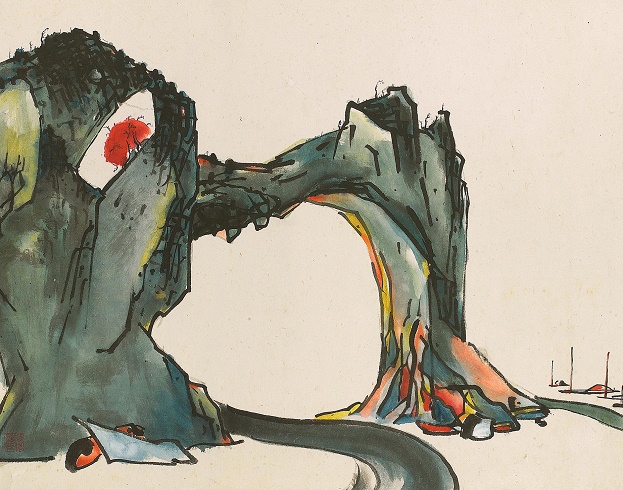
quality. Several of Zeng Xiaojun’s paintings are of monumental size (135 x 323 cm) (
10).
For further information contact Karen Wender (Tel: 212-588-1198).
 |
| 11 |
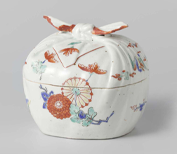
E & J Frankel, Ltd is presenting from March 31st to April 30th in their gallery (1040
Madison Avenue at 79th Street, Tel: 212-879-5733) a collection of fifteen yixing wares
from the 16th through the early 19th century which has been stored in Taiwan for the
last fifty-five years. Pictured is their Chen Mingyuan teapot in the form of a pumpkin,
reminiscent of one by the great Ming dynasty Yixing potter, Shen Dabin (
11). The
collection also has scholar’s implements and drinking cups all signed by the foremost
potters to have worked in Yixing.
Leading London dealer Eskenazi is holding their annual New York exhibition “Ancient
Chinese Bronzes and Sculpture” at Pacewildenstein (32 East 57th Street, Tel: 212-421-
3688) which will be shown from 28th March to 9th April. The exhibition will feature some
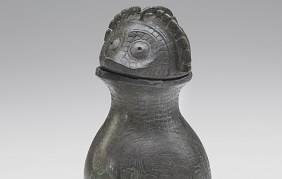
ten major bronzes and sculptures on view, including a bronze vessel, you and cover from
the Shang period, Anyang phase, cast some three thousand or more years ago (
12). Other
remarkable pieces include two carved limestone Buddha figures, 5th century AD, and an
elegant seated carved wood figure of a Bodhisattva, Song period.
 |
| 12 |
For their upcoming exhibition J.J. Lally & Co. (41 East 57th Street, Tel: 212-371-3380)
will be showing early Chinese ceramics from an American private collection. Carefully
put together in the past fifteen to twenty years, the collection includes a good
selection of early Chinese ceramics dating from the Neolithic period (3rd Millennium BC)
to the end of the Song dynasty (13th century), with a main concentration on the Song
dynasty. The special exhibition will take place from March 28th–April 16th, 2005 and
will be accompanied by a scholarly catalogue providing a full description and a colour
illustration of each item. I have selected to illustrate a painted Cizhou vase
(meiping), Jin dynasty, 12th/13th century, height 40 cm (
13).
 |
| 13 |
Bangkok based dealer in Himalayan and Chinese art Mehmet Hassan will be exhibiting for
the first time at The International Asian Art Fair. As a long time dealer working from
home on an appointment only basis he is looking to find new clients in the American
market. He says, “I am getting fewer visitors to Bangkok and not having a gallery it is
important to have a venue where I can present high quality works of art to the
sophisticated American market.” Amongst the items he will be bringing is a ritual bell
and dorje with the imperial mark of the Yongle reign (1403–1424)
 |
| 14 |
(
14) and a beautiful
white marble torso of the Buddha dating from the Northern Qi period (550–577). Also
being shown are several high quality Tibetan manuscript covers and bronzes as well as
Chinese stone sculpture and early bronze material. Mehmet Hassan will be producing an
exhibition catalogue.
Michael C. Hughes is again showing at the Ingrao Gallery at 17 East 64th Street between
Fifth and Madison (Tel: 212-472-5400) from March 29th to April 8th; major items come
from four private collections in the US and Europe. Important highlights are a pair of
huanghuali wood figures and a select group from Tibet including a massive 15th century
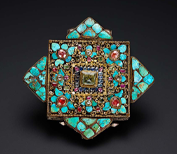
seated figure of Buddha Aksobhya, almost 60 cm high. A 15th century red lacquer box
(
15),
 |
| 15 |
16th-18th century cloisonné, furniture, archaic bronzes and jades are included,
and a group of snuff bottles rounds off the exhibition.
Rossi & Rossi of London is holding at the Barbara Mathes Gallery (Fuller Building, 41
East 57th Street, Tel: 212-752-5135) the first ever commercial exhibition dedicated
specifically to Mongolian sculpture from the School of Zanabazar. “Treasures from
Mongolia: Buddhist Sculpture from the School of Zanabazar” will run from 28th March to
4th April. The exhibition is accompanied by a fully illustrated scholarly catalogue with
an essay by Gilles Beguin, Conservateur General du Musée Cernuschi, Paris. Illustrated
is a 17th/early 18th century figure of Sitatapatra, goddess of the glorious white
parasol (
16). It bears strong resemblance to a group attributed to Zanabazar (1625–
1723), the religious ruler of Mongolia skilled in bronze casting, who contributed significantly to the arts of his country.
 |
| 16 |
As usual Sandra Whitman will be exhibiting at The International Asian Art Fair in New
York City with a group of regional carpets; Khotan, Ningxia, Baotou, Peking and Tibet,
as well as three East Turkestan carpets and an important complete Ming runner. The
latter is geometric with an octagon field and narrow robin’s egg blue wan border and
liver coloured outer border. Illustrated is her Kangxi period circa 1700 Ningxia carpet
from western China in the stars and squares pattern (
17).
It will be remembered with pleasure that the James H.W. Thompson Foundation in
conjunction with Jim Thompson Thai Silk Company held their successful symposium,
“Southeast Asian Textiles through the Thread of Time” in August 1999. This I reported in
my November–December 1999 Editorial, pages 8–9. It brought together twelve distinguished
speakers and over two hundred participants.
Plans are now announced to hold a second symposium in Bangkok from August 4th to 7th,
2005. The event will feature a two-day symposium, to be held on August 4th and 5th, with
lectures by distinguished scholars and textile experts from around the world. Entitled
“Status, Myth and the Supernatural-Unraveling the Secrets of Southeast Asian Textiles”,
the symposium will focus on the traditional role and function of textiles in countries
such as Burma (Myanmar), Cambodia, Indonesia, Laos, the Philippines and Thailand.
Other activities include an optional three-day excursion to visit weaving areas in
Northeast Thailand. During the symposium there will be special textile displays and
exhibitions. The objective of the symposium is to provide a forum for the exchange of
ideas and new research on traditional Asian textiles. More information is available on
www.seasiantextiles.com.
 |
| 17 |
Impressed by the short introduction by Christina Chu, Chief Curator of the Hong Kong
Museum of Art, published towards the end of this issue, we made a point of attending the
opening on December 23rd, 2004 just before Christmas of the exhibition “Huang Yongyu at
80”. Important Hong Kong officials, seen at the opening standing next to the artist, are
dressed in red Ms Anissa Wong Sean-yee, Director of Leisure and Cultural Services, and
in purple Ms Elsie Leung, Secretary for Justice (
18). The artist is greatly popular in
our area of Hong Kong, and China itself, for his Chinese ink paintings with bright and
luxuriant colours, and particularly of the lotus. The popularity of his paintings was
expressed most visibly by the bank of flowers that encircled the gallery foyer from his
named supporters and the Chinese ink painter’s enthusiasts of all ages who attended the
opening.
Before closing my Editorial I had a last chance to reread the press release of
Christie’s Hong Kong dated December 17th, 2004 announcing the departure of Anthony Lin.
I feel it is important for my readers to know what Mr Edward Dolman said there:
 |
| 18 |
"Anthony Lin has played a key role in establishing our dominant role in Asia. He has
been a guiding light and mentor to our highly successful international Asian department,
and as a colleague, has been a pleasure to work with. His dedication and commitment to
Christie’s has been exemplary throughout his career. I understand his desire to change
direction at this time and wish him ongoing success in the future. While we will all
miss Anthony, I anticipate that we will work with him in his new capacity. I am also
confident that Christie’s leading presence in Asia will continue to develop and we will
see further exciting developments in the region in the coming year."
Mr Dolman’s office in London has told me that "up to now we have not found anyone to
replace Mr Anthony Lin. We are still searching." I hope I will be able to mention the
name of the selected candidate in my Arts of Asia May-June 2005 Editorial.